In Kansas City, encapsulating a crawl space that still takes on standing water traps the problem under the liner, so drainage and a discharge plan come before the liner.
The short answer
Fix the water first. The DOE Building America Solution Center's guide on water management of an existing crawl space floor says bulk water and drainage problems are treated before a vented crawl space is sealed and insulated. Start outside with roof water and grade, then collect and pump what still gets in, then watch the space through wet weather. Only then does the liner go down.
What standing water in a crawl space means
The DOE water management guide is direct: standing water in a crawl space means bulk water is getting in. It is not humidity or condensation. It is liquid water arriving from somewhere.
The same guide makes a point that saves people money: a sump pump alone does not fix the entry. A pump removes water that has already arrived. If nothing is done about how it arrives, the pump runs forever and the soil around the house stays saturated.
The DOE guide to unvented, insulated crawl spaces adds that standing water, mold and rotten wood should be dealt with before air sealing and insulating.
Start outside: roof water and grade
The DOE water management guide lists the outside work:
- Regrade so the soil slopes away from the foundation.
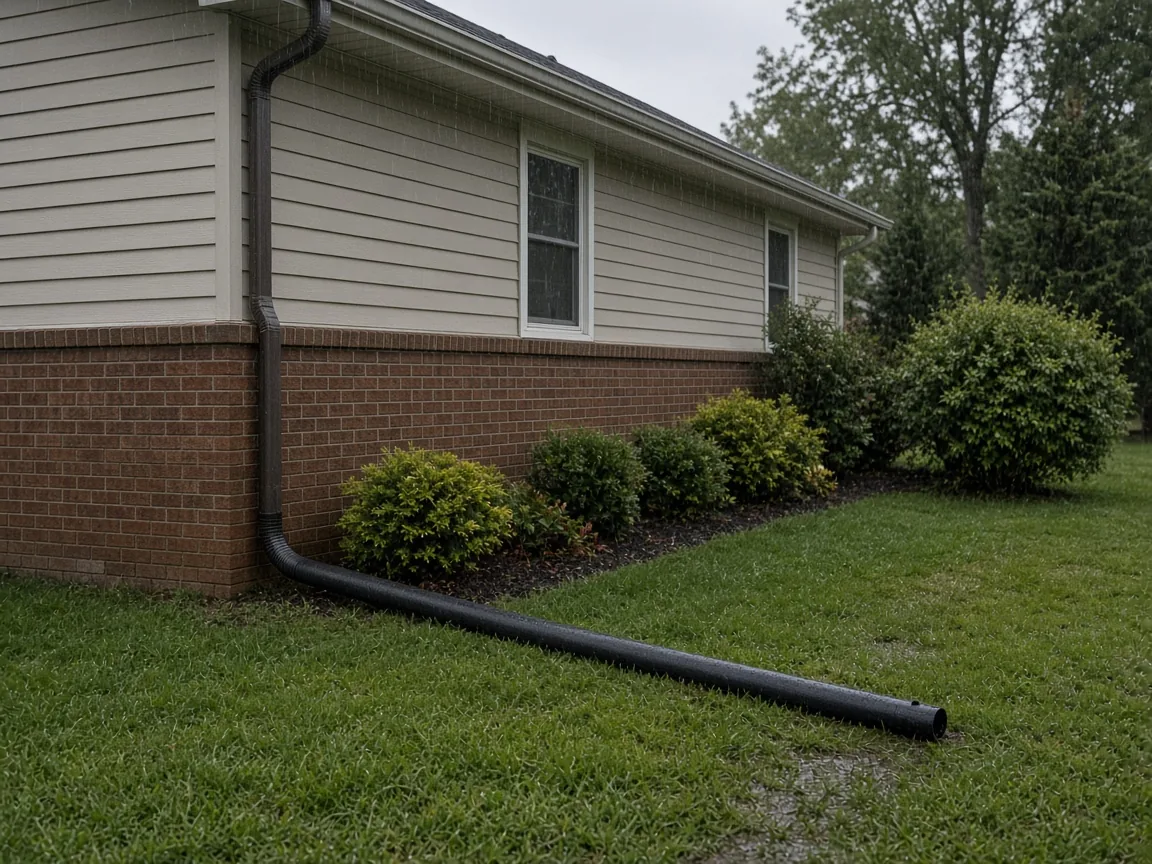
- Fix or add gutters and downspouts that carry rain away from the foundation.
- Check walks and driveways slope away from the house, not toward it.
- Add footing drains where needed, discharging to daylight or a drywell.
The volumes are bigger than people expect. The National Park Service's moisture guidance, Preservation Brief 39, notes that a rain of 2 inches in an hour can send about 200 gallons through a single downspout in that hour. Its grading target is roughly 6 inches of fall in the first 10 feet away from the foundation.
Why Kansas City clay holds water against the house
K-State Research and Extension in Johnson County describes local soils as very high in clay. Clay holds a lot of water in heavy rain, swells when wet and shrinks when dry, and in dry weather it can crack open an inch or more.
Two things follow for a crawl space. Water dumped beside the foundation does not drain away quickly through clay, so it sits against the walls. And the cracks that open in a dry spell give the next heavy rain a fast path down beside the foundation. That is why getting roof water away from the house matters so much here.
Inside the crawl space: collecting and pumping what still gets in
Once the outside work is done, some crawl spaces still collect water in their low spots. The DOE water management guide describes the inside fix: a sump pit in the low spot, 2 to 3 feet deep, perforated at the bottom, with a gasketed tight lid. The lid matters because an open pit lets moisture and soil gases into the crawl space.
Preservation Brief 39 notes that sump pumps need backup power in storms, which is exactly when the pump has the most work to do.
Where the pump discharges
A pump has to send water somewhere. Water should discharge well away from the foundation and onto your own lot, so it does not run straight back to the house or onto a neighbor's property. Where the outlet ends up is part of the plan, not an afterthought.
How long to watch before sealing
The DOE water management guide recommends monitoring crawl space temperature, relative humidity and the moisture content of rim and floor joists, preferably for a year after the work.
Our approach: at minimum, we want to see the crawl space through a real wet spell after the drainage work, before the liner goes down. If water still appears, the drainage is not finished. Sealing over it would hide the problem, not solve it.
When the fix is in the yard, not under the house
Sometimes the real fix is outside: regrading a yard that slopes toward the house, or an exterior drain. That is a separate trade from crawl space work. If that is what your house needs, we will tell you, so you are not paying for a liner over a problem that starts in the yard.
Once the water is handled, the next steps are covered on our pages on vapor barriers, crawl space repair and encapsulation. For the other half of the moisture story, read why vented crawl spaces stay wet. More guides are on our guides page.
Wet crawl space questions
When should you not encapsulate a crawl space?
When water is still getting in, when there is standing water, when rotten framing has not been repaired, when combustion equipment draws its air from the crawl space, or where flood risk is very high. The DOE guides put water, rot and combustion appliances ahead of sealing, and Oak Ridge National Laboratory's Foundation Design Handbook makes very high flood risk the exception to sealing.
How do I dry out a wet crawl space?
Stop the water entry, pump out what is standing, remove soaked insulation and debris, then dry the space with ventilation or a dehumidifier, and cover the soil. The EPA's guide to mold and moisture says wet materials should be dried within 24 to 48 hours to limit mold. If mold has already started, see crawl space mold and odor.
Is a sump pump enough on its own?
No. The DOE water management guide says a sump pump alone does not fix the entry. It handles water that has already arrived; the outside work keeps it from arriving.
Sources
- DOE Building America Solution Center, Water Management of Existing Crawlspace Floor (updated 2015)
- DOE Building America Solution Center, Unvented, Insulated Crawlspaces (updated 2021)
- National Park Service, Preservation Brief 39: Controlling Unwanted Moisture in Historic Buildings (1996)
- K-State Research and Extension, Johnson County, Clay Soil: It shrinks and swells
- Oak Ridge National Laboratory, Foundation Design Handbook, section 3.1
- U.S. Environmental Protection Agency, A Brief Guide to Mold, Moisture and Your Home
Get a wet crawl space looked at
Send photos of any standing water, the ground inside, and the downspouts on the wet side. Ask for a crawl space quote.